Do you still need an invitation to register for WeChat? How to buy medicine on food delivery platforms? Do Didi drivers speak English? Can you use your phone to pay for the subway? This guide covers all the most frequently asked payment and travel questions in China. It clearly explains how to use Alipay, WeChat, Didi and food delivery apps, and cash is also accepted—no complicated jargon, just straightforward tips.
3. Payment & APP Usage
Q: How can foreign tourists quickly buy daily necessities, medicine and food in China in 2026?
A: You can place orders on the two mainstream takeaway platforms in China, “Meituan” and “Ele.me”. Both platforms have launched a complete English interface, support the binding and payment of overseas bank cards, and orders in urban areas are usually delivered within 15-30 minutes, and at most 1 hour.
These two platforms cover most cities in China, and can buy a full range of goods including daily necessities, over-the-counter drugs, food, catering, etc. If you cannot operate the platform by yourself, you can ask the hotel front desk or store clerk to help place the order, which is a very common and convenient way in China.
If you buy prescription drugs, you need to provide an electronic prescription issued by a domestic hospital, and you can ask the hotel staff to assist in completing the online consultation, prescription and drug purchase.
Q: Do I need an existing WeChat user to invite me to register for WeChat in 2026?
A: No, you don’t. The registration process of WeChat for overseas users has been fully simplified. You can complete the registration independently with an overseas mobile phone number or a local Chinese mobile phone number, without the invitation of an existing WeChat user. The “invite friends” prompt you see during registration is just a user recommendation activity in the App, not a mandatory step for registration, and you can skip it directly.
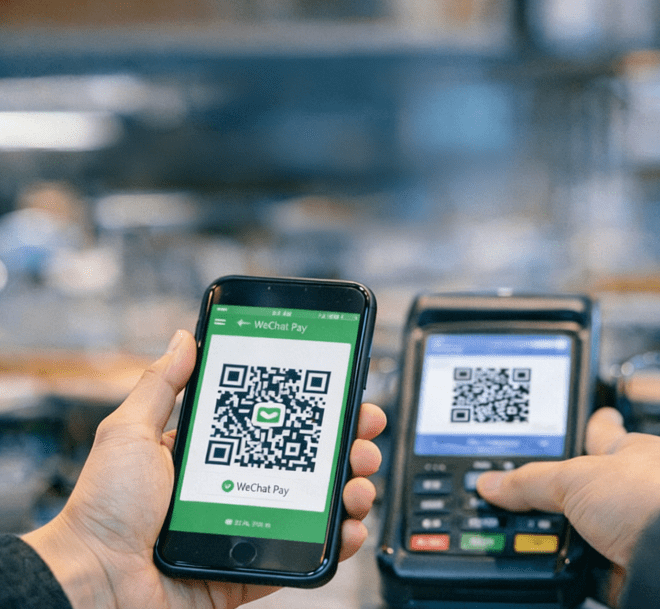
Q: What should I do if the system requires QR code verification from an existing WeChat user when registering for WeChat?
A: This is a security auxiliary verification mechanism triggered by WeChat only for overseas mobile phone numbers in some high-risk areas and abnormal registration behaviors, and is not required for all overseas users to register.
If this verification is triggered, you don’t need to find help overseas in advance. After arriving in China, you can ask the hotel front desk, airport staff, or chain convenience store clerk to help you scan the code to complete the verification. This is a very common help scenario, and they are usually willing to assist.
At the same time, there is no need to rush to complete the WeChat registration before departure. You can complete the registration and payment function activation of Alipay before coming to China – the registration process of Alipay for overseas users is simpler and can cover most consumption scenarios in China. WeChat can be registered and verified after arriving in China.
Q: What is the standard process for foreigners to register for WeChat in 2026?
A: The standard simplified registration process for foreigners in 2026 is as follows:
Open the WeChat App and select “Sign Up”.
Choose the registration method: you can select “Mobile Number”, which supports overseas mobile phone numbers from most countries and regions in the world, or a local Chinese mobile phone number.
Fill in the mobile phone number, receive and fill in the SMS verification code.
Set a login password to complete the basic registration.
Later, you can upload your passport to complete real-name authentication through “Me > Services > Wallet > Identity Information”, and bind an overseas bank card to activate the WeChat Pay function. No Chinese mobile phone number or Chinese bank card is required to activate the basic payment function.
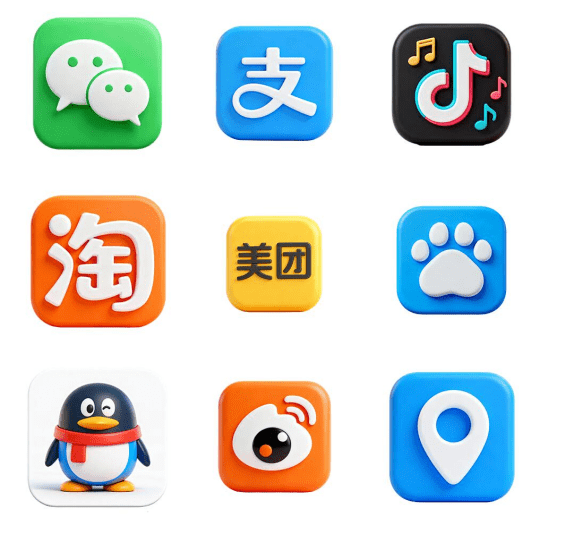
Q: What essential apps do I need to download for traveling in China in 2026?
A: The essential apps for traveling in China are divided into the following categories, which you can download as needed. All mainstream apps already support the English interface, and overseas user registration and use:
Payment & Social: Alipay, WeChat, which cover more than 99% of offline consumption scenarios in China, support the binding of overseas bank cards, and can use mobile payment without a Chinese bank card.
Transportation: Gaode Map / Baidu Maps, which have launched a complete English navigation and overseas location search function, with better adaptability and data accuracy in China than Google Maps; DiDi Global, which supports English interface, overseas bank card payment, can call a ride-hailing service with one click, and some exclusive models are equipped with drivers who support English communication.
Daily Life: Meituan, Ele.me, where you can order takeout, buy daily necessities, buy scenic spot tickets, book local services, and support English interface and overseas payment.
Translation Tools: Google Translate, Youdao Translate. It is recommended to download the Chinese offline translation package in advance, which can be used without a network, and supports real-time voice and photo translation.
Optional supplement: e-CNY (Digital Yuan) App. Overseas users can register and activate the wallet with their passports, which supports offline consumption and online payment without binding a bank card.
4. Transportation & Travel
Q: Do DiDi Premium or Luxury drivers speak English in 2026?
A: In general, it is not recommended to assume that DiDi Premium or Luxury drivers have English communication skills. The “Premium/Luxury” label of DiDi only represents the excellent performance of drivers in driving scores, service standards, vehicle quality, and order compliance, and English proficiency is not included in the service standards.
In 2026, DiDi has launched the exclusive “English Service” model at airports and core business districts in first-tier cities (Beijing, Shanghai, Guangzhou, Shenzhen) and new first-tier cities in China. Drivers who choose this model have passed the basic English proficiency assessment and can meet basic travel communication needs. For drivers in other cities and other models, the vast majority can only communicate in Chinese, and some drivers can only use local dialects and cannot communicate in English.
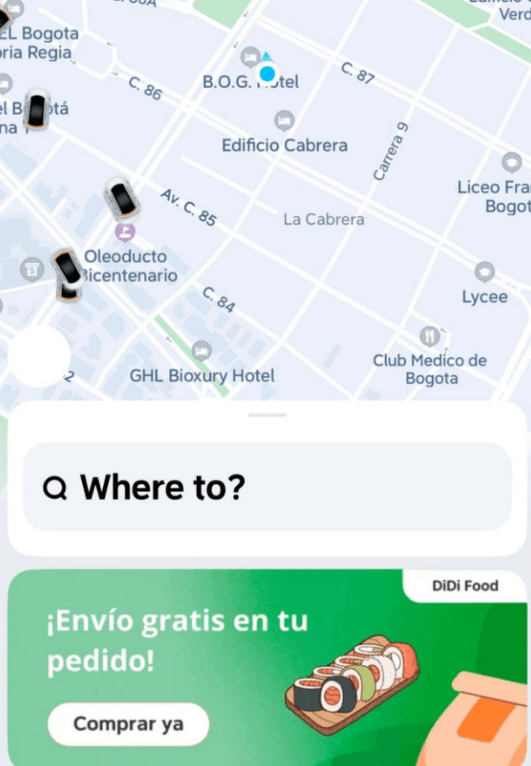
Q: What should I do if I can’t speak Chinese when taking a DiDi in 2026?
A: You can solve the communication problem in the following ways without relying on spoken Chinese:
Priority is given to using DiDi Global. The App has a full English interface and built-in automatic Chinese-English translation of destinations, and real-time location sharing function. You only need to enter the English destination, and the system will automatically translate it into Chinese navigation for the driver without manual translation.
Prepare the Chinese address of the destination, hotel business card or scenic spot location in advance, enter it directly in the App or send the location, and the driver can drive directly according to the navigation without voice communication.
The App has a built-in real-time two-way text/voice translation function. You can directly enter text in English, and the system will automatically translate it into Chinese and send it to the driver. The driver’s reply will also be automatically translated into English, without manually using a third-party translation tool throughout the process.
If you are traveling in a first-tier city, you can directly choose the “English Service” exclusive model. The driver has basic English communication skills and can communicate directly in English.
Q: How does public transport work in China in 2026? Can I pay with WeChat or Alipay?
A: China’s public transport has fully supported mobile payment for overseas users. The most convenient ways to use it are as follows:
Metro: Use Alipay “Transport” section or WeChat “Ride Code” mini-program, select the metro ride code of the corresponding city, and you can scan the code to enter the station. It supports overseas users in registering and activating with their passports. No Chinese mobile phone number or Chinese bank card is required, and it has been supported by metros in most cities in China.
Bus: You can also use the bus ride code of Alipay and WeChat to scan the code to ride, which has been covered by more than 95% of urban buses in China.
If you are not used to using mobile payment, you can also use cash: buy a one-way ticket at the metro ticket vending machine (supports English interface and cash payment), and you can directly put cash on the bus.

Q: Does everyone need their own phone to pay for public transport when traveling in a group? Are there discounts for kids and seniors?
A: When traveling in a group, if you use the mobile ride code to pay, the metro and bus systems in most cities only support a single scan of the ride code of the same account. Therefore, everyone needs to activate the ride code on their own mobile phone to complete the scan. In this case, it is much more convenient to pay with cash: buy one-way metro tickets for the group uniformly, and put cash directly on the bus.
China’s public transport has a unified national basic preferential policy for children and the elderly, and each city has detailed standards on this basis:
Children: According to the national unified regulation, children with a height of 1.3 meters and below can take the metro and bus for free when accompanied by an adult; minors with a height of more than 1.3 meters can enjoy a half-price discount, subject to the specific regulations of the local city.
Seniors: People aged 65 and above can enjoy free or half-price discounts on public transport in most cities with valid documents. The specific policy can be checked in advance on the official announcement of public transport in the destination city.